How Play-Based Learning Sparks a Love of Science

Science in early childhood can begin with a puddle after the rain. A tower that keeps tumbling down. A baking soda volcano that has everyone waiting for the eruption. A seed slowly pushing its way through the soil.
For a young child, each one holds a question waiting to be explored.
Science in early childhood does not begin with a textbook, a laboratory or knowing the correct answer. It begins with curiosity. Every time a child asks “why?”, predicts what might happen or changes their approach after something does not work, they are already thinking like a scientist.
National Science Week, held from 15 to 23 August 2026, gives us a wonderful opportunity to celebrate that way of thinking. This year’s school theme, Seeds of Science: Nurturing Knowledge for All, explores how ideas take root and grow. Often, it starts with the smallest spark of a question. At Journey Early Learning, we see those sparks every day.
What does science look like in early childhood?
For young children, science is active. It happens through touch, movement, conversation and play.
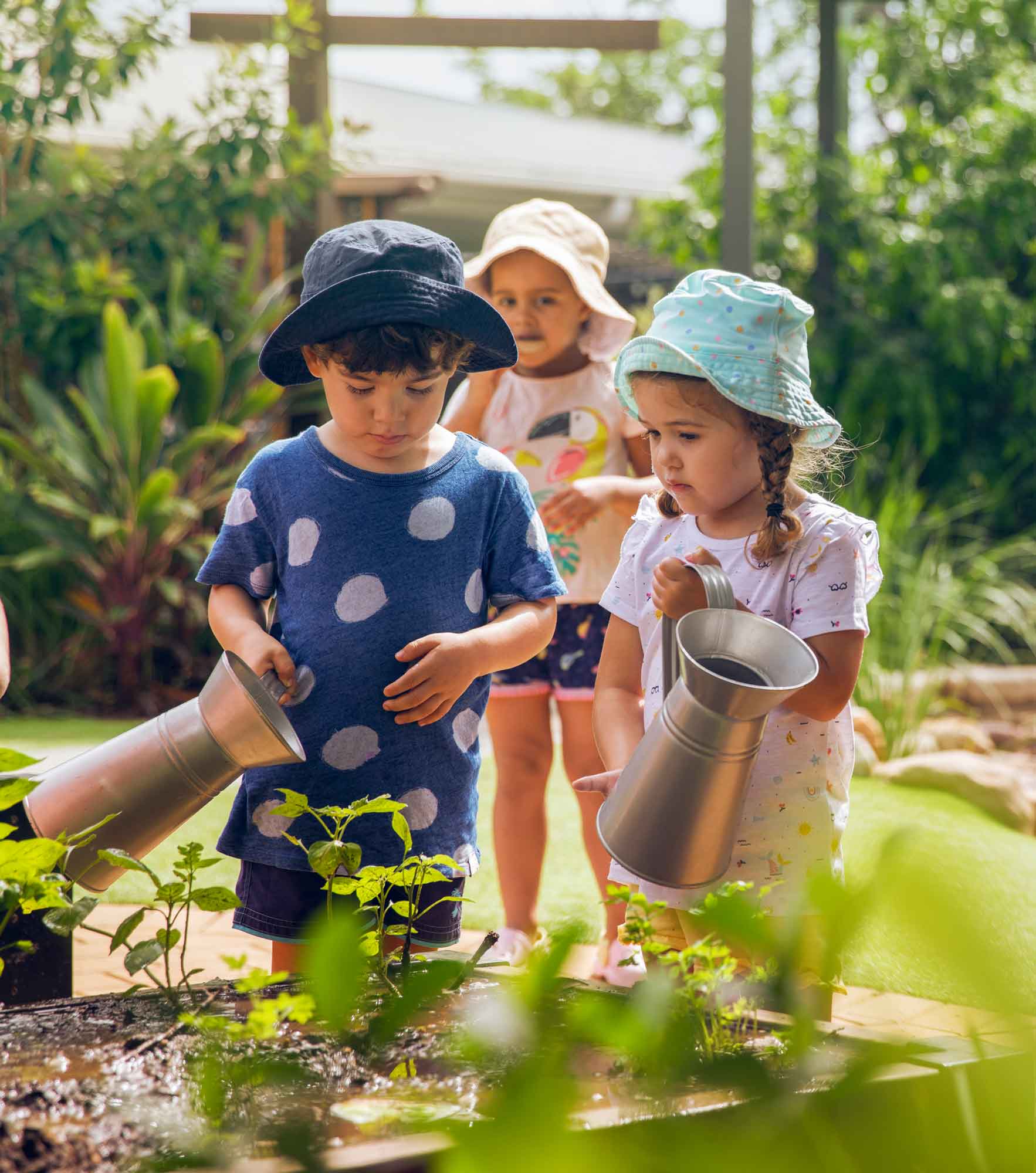
It might look like a child mixing two colours and watching a new one appear. Another child may be building a ramp to see which toy car travels the fastest. In our gardens or on excursions, children might search for insects, compare different leaves or wonder why some patches of soil feel wetter than others.
Children explore scientific ideas when they:
-
Watch ice melt in the sun
-
Build towers, bridges and ramps
-
Test which objects float or sink
-
Mix, pour and measure
-
Investigate light, shadows and reflections
-
Observe insects, plants and changing weather
-
Compare the size, weight and texture of different materials
-
Plant seeds and care for growing herbs or vegetables
-
Experiment with water, sand, mud and natural loose parts
These moments may look simple, but there is plenty happening beneath the surface.
Children notice patterns, explore cause and effect, form theories and gather new information. They learn that ideas can be tested and, importantly, changed. In science in early childhood, even an unexpected result can lead to an exciting new discovery.
The official National Science Week Early Childhood Activities booklet highlights observation, prediction, testing and refining as processes that young children can experience through informal, enjoyable activities. Science and play are a natural fit at Journey.

Why play-based learning encourages scientific thinking
Play gives children room to follow their ideas.
Take a child building a bridge with blocks. They choose the pieces, decide how to arrange them and test its stability. When the bridge falls, they stop, look and try another solution. Without realising it, they are exploring balance, weight, shape, force and engineering. They are developing persistence too. One of our educators might sit nearby and ask:
-
“What did you notice?”
-
“Why do you think it fell?”
-
“What could make the bridge stronger?”
-
“What do you think will happen if you add another block?”
-
“How could we test your idea?”
There is purpose behind each question. The educator gives the child time to think rather than stepping in with an immediate solution. New words can be introduced, different materials added and the experience can continue in a direction shaped by the child’s interest.
At Journey, children are active participants in their learning. Our educators bring knowledge, careful observation and intentional teaching to help them take their ideas further.
Australia’s Early Years Learning Framework recognises that intentional play-based learning can expand children’s thinking and strengthen their desire to know and learn. It also supports dispositions such as curiosity, creativity, confidence, persistence and imagination.
How science in early childhood supports children’s development
Early science experiences bring many areas of development together. A single investigation can involve thinking, talking, moving, cooperating and managing emotions.

Problem-solving and flexible thinking
Science in early childhood encourages children to consider what they already know and what they could try next.
When children predict whether an object will sink, work out how to move water between containers or find a way to stop a tower from falling, they practise reasoning and problem-solving. They hold information in mind, observe what happens and adjust their approach.
Executive function skills are an important part of science in early childhood. These include attention, working memory and flexible thinking. The Center on the Developing Child at Harvard University explains that these skills help children plan, focus their attention, manage information and adapt when circumstances change.
Language and communication
Science gives children something meaningful to talk about. They describe what they can see, explain their ideas and listen to what others have noticed. Words such as float, sink, measure, absorb, predict, sprout and dissolve become connected to things they have actually seen and felt.
Research on children’s question-asking suggests that practising how to ask questions can strengthen curiosity and increase interest in new scientific information. Sometimes, the question itself is the most valuable part of the experience.
Confidence and persistence
Of course, things do not always work the first time. Water escapes. A carefully built tower collapses. Seeds take what feels like forever to appear or look very, very sad after a long weekend.
Each result gives children something new to consider. They can pause, wonder what happened and try a different approach. Over time, they begin to understand that finding something difficult does not mean they cannot do it. They may simply need more time, another idea or a little help. By building confidence and learning to persist through challenges, children gradually develop the resilience to keep going when things do not go as planned.
Social skills and collaboration
In our rooms, children often work together to build a water channel, investigate where snails like to hide or care for a vegetable garden. One child may notice something another has missed. Another may suggest a new way to test the group’s theory.
Listening, negotiating and contributing ideas all become part of the investigation.
Physical and sensory development
Early science is wonderfully hands-on. Children dig, pour, squeeze, carry, collect, sort and build. As they explore temperature, movement, texture, sound and weight, they also strengthen fine and gross motor skills.
It is learning by doing in its most natural form.
Science in action at Journey Sale
At Journey Sale, this approach has grown into Little Scientists, Big Discoveries!, a 10-week Inspire Program created and led by Educational Leader Taylor.
“I’ve always believed that children are naturally curious and learn best when they’re encouraged to ask questions, explore and discover the world around them,” Taylor explains. “I wanted to create something that wasn’t just another science activity, but a program that fostered a genuine love of inquiry and critical thinking.”
Each week, children in Kinder 1 and Kinder 2 take part in hands-on investigations using materials such as magnets, water, light, seeds, bubbles and measuring tools. The children are encouraged to wonder, make predictions, test their ideas and develop their own understanding.
The response has already been wonderful.
“From the very first session, the children have been excited, engaged and eager to participate,” Taylor says. “It’s been wonderful to see children who are usually quieter becoming involved because the experiences are so hands-on and invite everyone to contribute in their own way.”
The questions often continue long after the session has finished. Children return to earlier investigations and talk about their discoveries with educators, friends and families.
“It’s becoming much more than a weekly science activity,” Taylor says. “It’s creating a culture of curiosity, where children feel confident to explore, question and discover the world around them.”
At the end of the program, the children will share what they have been learning at a Science Fair for families.

Following children’s interests at Journey
Science learning continues throughout the year at Journey. Our educators watch and listen closely, noticing what captures a child’s attention and looking for thoughtful ways to extend it.
A caterpillar discovered outside might lead to conversations about life cycles. A question about rain could inspire weather observations and water collection. An interest in wheels may grow into an investigation of ramps, surfaces and speed. Some explorations last for an afternoon. Others develop over days or weeks. Educators support this learning by:
-
Providing open-ended and natural materials
-
Creating opportunities to predict, test and investigate
-
Asking questions that invite deeper thinking
-
Recording children’s theories and discoveries
-
Revisiting questions as children’s ideas develop
-
Encouraging children to explain their thinking
-
Allowing each investigation to grow at its own pace
Curiosity leads the way.
Seven simple ways to explore science at home
Science in early childhood can continue at home through simple, everyday experiences. You do not need specialist equipment or complicated experiments to encourage your child’s interest.
-
Explore the question together
When your child asks why something happens, pause before answering.
You could say:
-
“What do you think?”
-
“How could we find out?”
-
“What have you noticed?”
-
“Shall we test your idea?”
A simple question shows children that their thinking matters.
-
Make predictions
Ask what your child thinks will happen before placing an object in water, planting a seed or leaving an ice cube in the sun.
Being correct is not the goal. The value lies in considering a possible outcome and then observing what actually happens.
-
Slow down outside
Take a closer look at your garden, a local park or the path to the shops.
Notice clouds. Compare leaves. Watch ants moving. Look at how shadows change.
There is no need to turn the moment into a formal lesson. Wondering together is enough.
-
Play with water
Cups, spoons, funnels and safe household containers can introduce ideas about movement, volume and measurement. Which container holds more? What happens when the funnel is lifted higher? Which safe objects float?
-
Build something
Offer blocks, boxes, recycled tubes or other age-appropriate materials and invite your child to build a tower, bridge or ramp. Let them decide what it should look like. If it falls, give them time to consider what they could change. You may be surprised by what they create. Simple boxes and tubes can offer more possibilities than a ready-made toy.
-
Investigate in the kitchen
Cooking is full of science. Talk about ingredients melting, mixing, bubbling or changing texture. Measure together and compare what you notice before and after cooking.
-
Notice the effort
The final result is only one part of the experience.
Try saying:
-
“You kept trying different ideas.”
-
“You noticed something had changed.”
-
“That result surprised us.”
-
“You found a way to test your idea.”
Your response can help your child see themselves as a confident and capable learner.